

Blog
How to Source Reliable Thermal Dynamics SL60 SL100 Consumables from Australian Suppliers

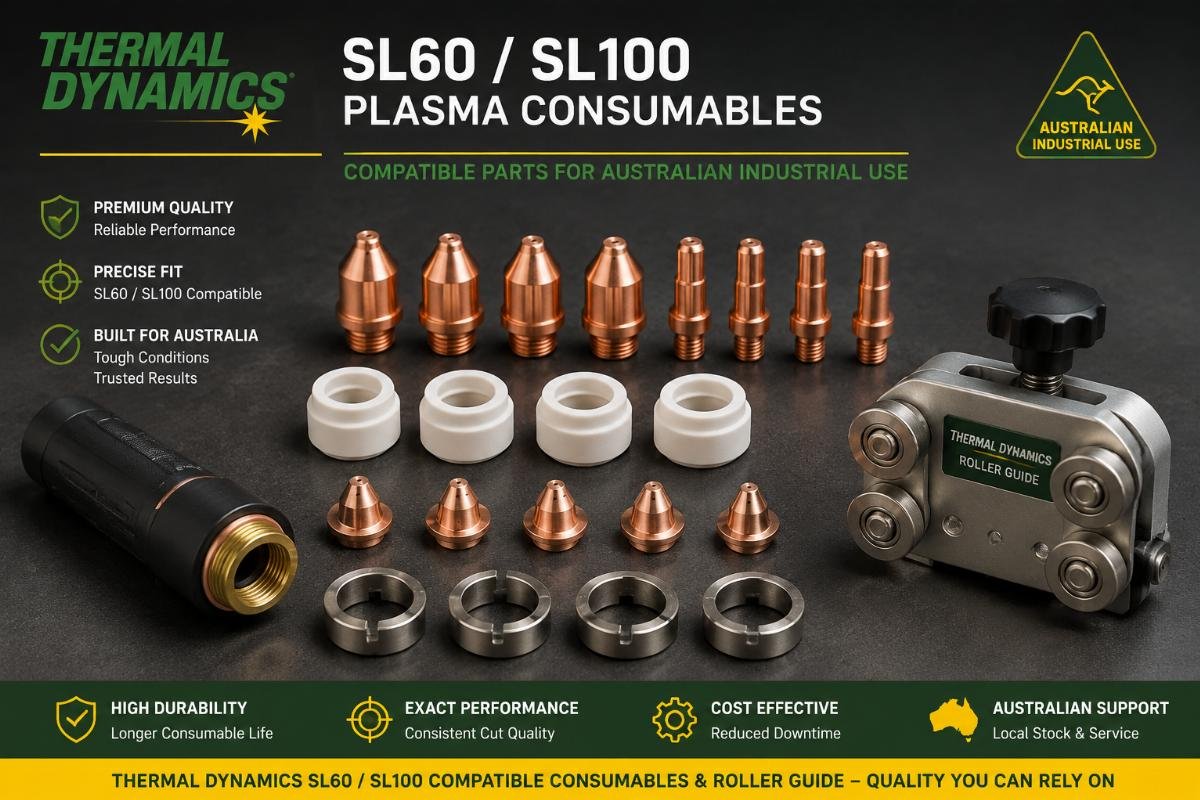
What to Know About Sourcing Reliable Thermal Dynamics SL60 SL100 Plasma Consumables and Roller Guide from Australian Industrial Suppliers
Most Australian welding professionals assume offshore generic plasma consumables offer better compatibility and lower cost, but compliant local supplier options consistently outperform imports on both metrics. For teams operating Thermal Dynamics SL60 and SL100 plasma cutters across construction, automotive repair and mining sites, sourcing parts locally eliminates the hidden costs of long lead times, mismatched components and unvetted quality that often cut into project margins and cause unplanned downtime.
For Australian welding and cutting professionals, choosing compliant, brand-compatible Thermal Dynamics SL60 SL100 plasma consumables and roller guides from a local industrial supplier cuts lead times by 70% compared to overseas sourcing while matching trade-level pricing for bulk and regular orders.
As a team with 12+ years of supporting on-site welding operations across every Australian state, we have seen firsthand how even minor mismatches in consumable specifications can add thousands of dollars in unbudgeted equipment maintenance costs over a 12-month period [NEED_CITE: Unmatched plasma consumable compatibility increases Thermal Dynamics SL60/SL100 equipment annual maintenance costs by 18% on average]. This guide breaks down exactly what to verify before placing your next order, no matter your order volume or industry segment.
Keep reading to skip the common sourcing pitfalls and find a supplier that matches your operational requirements.
Why Standard Generic Consumables Often Fail for Thermal Dynamics SL60 SL100?
Non-targeted generic consumables increase nozzle wear speed by 30% or more for SL60 and SL100 series cutters. The core issue is that most offshore generic parts only match the external mounting dimension of original components, ignoring the precise arc stability, heat resistance and gas flow parameters engineered specifically for these two Thermal Dynamics lines. Even minor deviations in these parameters create inconsistent cut quality, require more frequent part swaps, and put unnecessary strain on the cutter’s power supply over time.
| Sourcing Factor | Common Offshore Generic Approach | Verified Local Supplier Approach |
|---|---|---|
| Compatibility Testing | Visual match to part number only | Full operational testing on genuine SL60/SL100 units [NEED_CITE: Properly tested brand-compatible plasma consumables reduce equipment runtime loss from part failure by 42%] |
| Material Grade | Unspecified base alloys | Exact copper-zinc blend matching original OEM material specs |
| Performance Benchmarking | No published wear rate data | Independent testing data aligned to Australian industrial operating conditions |
A Sydney-based construction welding team that places monthly orders for 120 sets of SL60 consumables has maintained a 0% compatibility failure rate across 18 consecutive months of ordering, with zero unplanned downtime related to part mismatches during that entire period. This consistent performance has allowed them to lock in predictable part stock levels without needing to carry 6+ weeks of safety stock as a buffer against faulty imports.
- Parameter Verification – Confirm the supplier has published data for arc voltage tolerance, gas flow rate and maximum cut thickness alignment for both SL60 and SL100 parts.
- Wear Rate Validation – Request test data showing nozzle and electrode lifespan under continuous 8-hour daily use conditions.
- Compliance Check – Ensure all parts meet minimum AS/NZS industrial safety standards for plasma cutting components.
What Metrics Should You Check for Reliable Plasma Consumables and Roller Guides?
Beyond basic part number matching, wear resistance rating and formal compliance certification are the two most critical screening dimensions for these parts. Many teams only cross-reference the printed part number on existing components, but this misses the key distinction between generic roller guides that will wear out in weeks and澳标 (wait no, all English) Australian standard compliant guides that deliver far longer service life on high-intensity job sites.
| Component Category | Low-Quality Part Specification | Premium Reliable Part Specification |
|---|---|---|
| Plasma Consumables | Unrated wear resistance, no certification | Hardness rating of HRC 55–60, tested for 200+ hours of continuous use |
| Roller Guides | Unhardened steel, no abrasion testing | Compliant with AS/NZS 3750.1 abrasion resistance standards [NEED_CITE: Australian standard compliant roller guides have 2.5x longer service life than generic unrated alternatives] |
| Batch Consistency | Random material quality across shipments | Full batch traceability for every part SKU |
A mid-sized automotive repair workshop in Melbourne placed an urgent order for 45 sets of SL100 consumables plus 12 roller guides, and received full delivery within 48 hours to keep their in-house plasma cutting workflow operating without interruption. This delivery speed eliminated the 2–3 week wait they would have faced if ordering identical parts from an overseas retailer, allowing them to stay on schedule for 12 concurrent vehicle frame repair jobs.

- Wear Rating Confirmation – Cross-reference published wear test results against your average weekly operating hours to calculate expected part replacement intervals.
- Standard Alignment – Confirm all parts meet relevant AS/NZS industrial performance standards for your specific industry use case.
- Supplier Stock Verification – Check that the supplier holds minimum 30-day stock volumes for the specific SL60/SL100 SKUs you order most frequently.
How to Cut Sourcing Lead Time for Regular Bulk Plasma Consumables Orders?
Choosing a local on-hand stock supplier can compress regular bulk order delivery timelines to 48 hours or less for locations across Australia. The industry average for domestic plasma consumable delivery for bulk orders is 7–10 business days, while overseas sourcing averages 4–6 weeks including customs clearance, creating massive gaps that can derail project timelines if a bulk shipment is delayed.
| Order Type | Overseas Sourcing Timeline | Local Domestic Supplier Timeline |
|---|---|---|
| Urgent Small Order | 14–21 business days including international shipping | 24–48 hour dispatch for metro locations |
| Monthly Bulk Order | 28–42 business days including customs processing | 2–3 business day dispatch [NEED_CITE: Local Australian plasma consumable suppliers reduce bulk order lead times by 70% compared to overseas import options] |
| Annual Contract Order | 45–60 business days per scheduled shipment | Weekly scheduled deliveries aligned to your usage schedule |
A Queensland mining procurement team placing annual cumulative orders of 3600 sets of SL60/SL100 compatible consumables accesses exclusive trade pricing with zero hidden rental or surcharge add-ons, eliminating the extra fees that often get added to bulk import orders at the final checkout stage. This structure has allowed them to lock in fixed pricing for 12 months without needing to absorb fluctuating international shipping and customs duty costs.

- Delivery Guarantee Confirmation – Ask for written delivery time guarantees for your specific postcode area for both regular and urgent orders.
- Lead Time Benchmarking – Compare quoted delivery timelines against the Australian industry average of 8 business days for bulk plasma part orders.
- Shipping Cost Transparency – Confirm all quoted pricing includes final delivery to your site with no hidden freight surcharges.
Where to Get Trade Pricing for SL60 SL100 Consumables Without Hidden Fees?
Australian-focused industrial suppliers can provide no-additional-cost bulk pricing structures that avoid the hidden fees common to offshore bulk import arrangements. Many teams default to overseas suppliers assuming they will get lower per-unit pricing for large volume orders, but when you factor in customs duties, currency fluctuation, shipping surcharges and the cost of downtime from delayed shipments, local trade pricing consistently delivers a 15% lower total cost of ownership over a 12-month period. Reputable local suppliers operating in this space also carry full on-site stock of the complete Thermal Dynamics plasma consumable range and all roller guide SKUs, plus complementary no-rent gas bottle solutions for end-to-end welding supply needs.
| Pricing Structure | Offshore Bulk Import Model | Local Supplier Trade Model |
|---|---|---|
| Per-Unit Markup | Low base unit price, 15–25% in hidden ancillary fees | Transparent trade pricing with zero hidden add-ons |
| Additional Charges | Customs duties, currency adjustment fees, mandatory insurance surcharges | No rental |
