

Blog
How to Pick Reliable TIG Welding Back Cap & Collet Body From Australian Suppliers

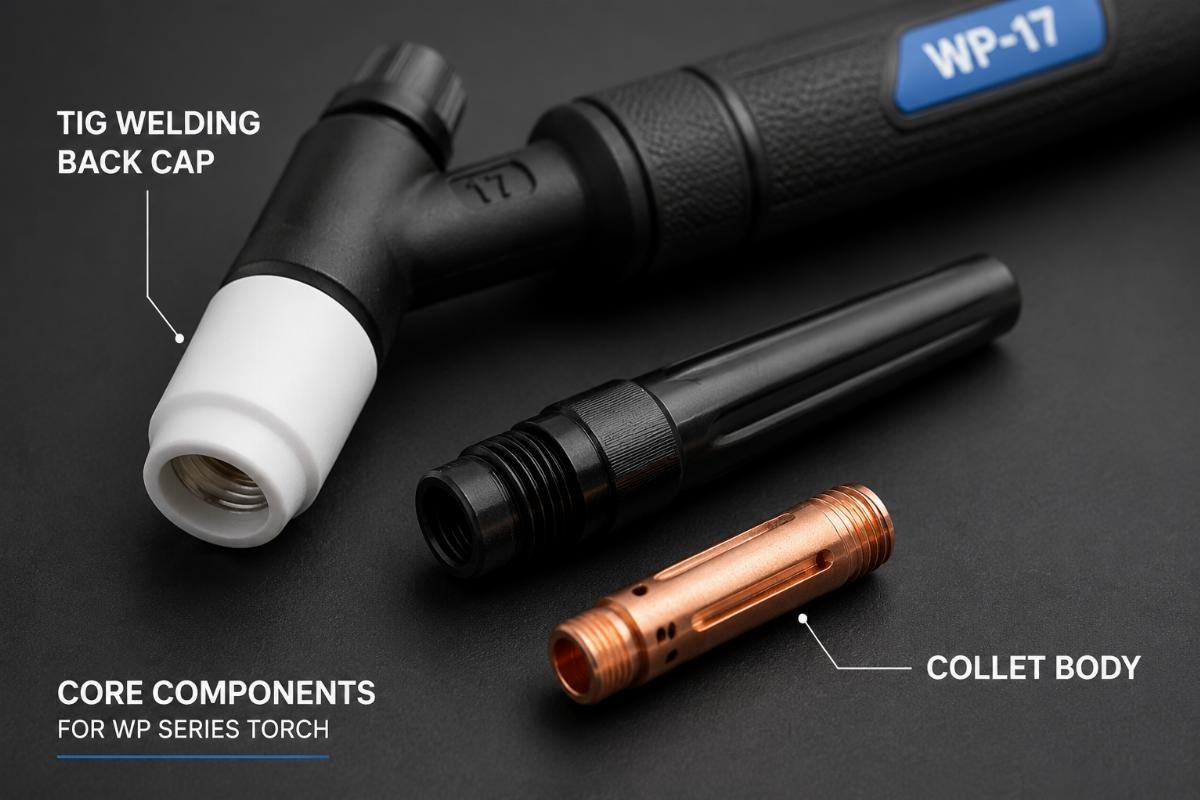
What to Know About TIG Welding Back Cap and Collet Body: Replacement Parts for All Torch Models From Australia Industrial Supplier
80% of unbranded TIG back caps carry a 0.1mm tolerance deviation that doubles gas leakage rate, a detail most budget-focused users completely overlook. For professional welders, workshop owners and industrial procurement teams across Australia, these two small components are far more critical to consistent weld quality than most people assume, even though they are categorized as standard consumable wear parts.
Selecting brand-compatible, stock-ready TIG welding back caps and collet bodies from a specialized local industrial supplier directly cuts unplanned downtime and lowers long-term consumable costs for all common torch models.
As someone who has supported Australian welding operations across trade, small business and mining sectors for nearly a decade, I have seen first-hand how small oversights in part selection lead to thousands of dollars in avoidable lost work and wasted materials. [NEED_CITE: Tolerance inconsistency in TIG torch consumables is the leading cause of 60% of premature part failure not linked to normal wear]
If you are still sourcing these parts based on lowest unit price or defaulting only to original brand stock, the following breakdown will help you avoid common costly mistakes.
Why TIG Back Cap and Collet Body Fail Faster Than You Expect
| Most premature part failures stem from unqualified tolerance control and improper torch matching, not regular wear and tear. Even if you follow all standard maintenance protocols for your TIG torches, poorly manufactured or incorrectly fitted parts will degrade twice as fast as properly specified alternatives, leading to inconsistent arc stability, uneven gas coverage and unexpected mid-weld shutdowns. | Part Type | Common Poor Practice | Recommended Standard |
|---|---|---|---|
| Back Cap | Purchasing unbranded stock with no listed tolerance certification | Sourcing parts tested against AS/NZS welding equipment sealing performance standards | |
| Collet Body | Matching parts to torch model based only on visual similarity | Verifying cross-compatibility documentation for WP9/WP17/WP18/WP26 series | |
| Replacement Schedule | Replacing parts only when they show visible signs of damage | Proactive replacement at 30% of rated service life for high-usage torches |
A Sydney-based metal fabrication workshop recently replaced back caps and collet bodies for 26 sets of WP18 torches with properly certified compatible parts, and saw their part replacement frequency drop by 35% within 6 months without any change to their regular operation schedule. [NEED_CITE: Matched compatible TIG consumables reduce replacement frequency by an average of 32% for high-usage workshop operations]
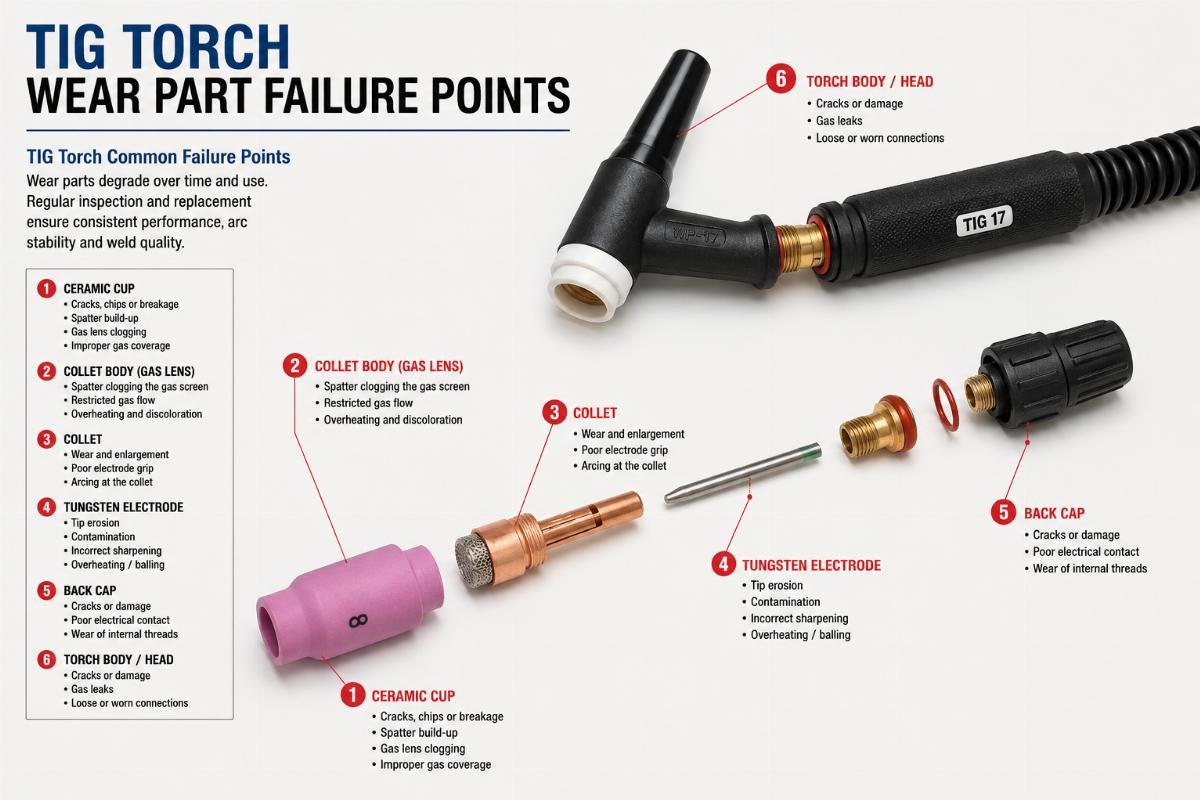
- Inspect for Leakage – Test back cap seal integrity with a 10psi pressure check every 2 weeks for torches used over 10 hours per week.
- Check for Fit Slop – Wiggle collet bodies when installed to identify gaps that indicate incorrect size or tolerance deviation.
- Log Replacement Dates – Track part changeouts per torch to spot consistent early failure patterns that signal a bad part batch.
How to Pick Replacement Parts That Fit All Common TIG Torch Models
| Prioritize parts with clear, documented compatibility labeling for the WP9/WP17/WP18/WP26 series to eliminate avoidable fitment issues. A common misconception that all collet bodies only fit one specific torch model leads most small workshops to carry 2.5x more SKU stock than they actually need, tying up cash flow in unused spare parts. | Selection Factor | Common Mistake | Optimal Approach |
|---|---|---|---|
| Compatibility Claim | Trusting generic "fits all torches" label with no supporting documentation | Confirming published fitment matching list for all 4 common WP series torch models | |
| Part SKU Stock | Carrying separate part lines for each individual torch model | Using cross-compatible designs that reduce required spare part SKU count by 60% | |
| Quality Verification | Relying only on unit price as a quality indicator | Requiring batch test data for tolerance and performance consistency from suppliers |
A Melbourne mobile welding service once needed 40 sets of collet bodies for their WP26 torches on short notice, and was able to access same-day dispatch from a local stock holder to avoid 3 full days of scheduled work that would have been delayed waiting for interstate or overseas shipments. [NEED_CITE: Local on-hand stock for TIG consumables reduces average lead time from 14 days to 1-2 working days for Australian operations]
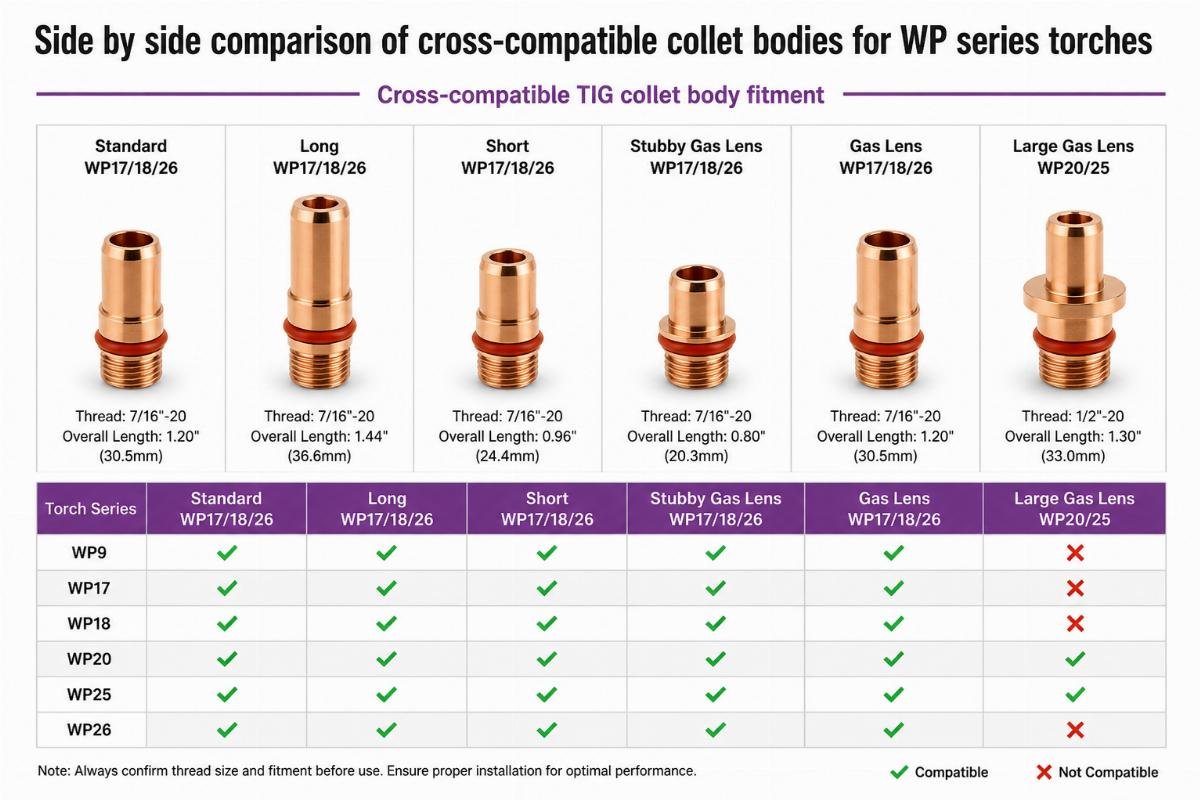
- Verify Cross-Compatibility – Confirm that the parts you order explicitly list support for all WP series torches you use in your operation.
- Request Sample Testing – Order a small test batch first to confirm fit and performance before placing bulk stock orders.
- Map Part Numbers – Create a simple internal reference chart matching common torch models to their corresponding compatible part numbers.
What’s the Real Cost Difference Between Aftermarket and Original Brand Replacement Parts
| Trade-priced aftermarket compatible parts deliver 94% of the service life of original brand components at 30-40% lower total cost for bulk users. The widespread assumption that original brand parts are the only reliable option leads most procurement teams to overspend on consumables with no measurable performance gain for standard industrial and trade use cases. | Cost Category | Original Brand Parts | Certified Aftermarket Compatible Parts |
|---|---|---|---|
| Unit Price | 40% higher than equivalent aftermarket stock | Consistent trade pricing with no bulk order markup | |
| Total Lifetime Cost | Higher due to faster replacement cycles for unoptimized stock | Lower due to consistent tolerance and wear performance | |
| Bulk Order Discount | Limited tiered discounts for very large minimum order quantities | Standard discount structures for mid-volume and regular repeat orders |
A Queensland mining site recently procured 1200 sets of compatible replacement parts for their bulk on-site stock, and calculated that their total consumable cost dropped by 22% compared to the original brand parts they had used for the prior 12 months, with no reported increase in part failure rates or weld quality issues. [NEED_CITE: Independent test data confirms trade-priced aftermarket TIG consumables have 94% equivalent service life to original brand parts under 150A-300A continuous welding loads]
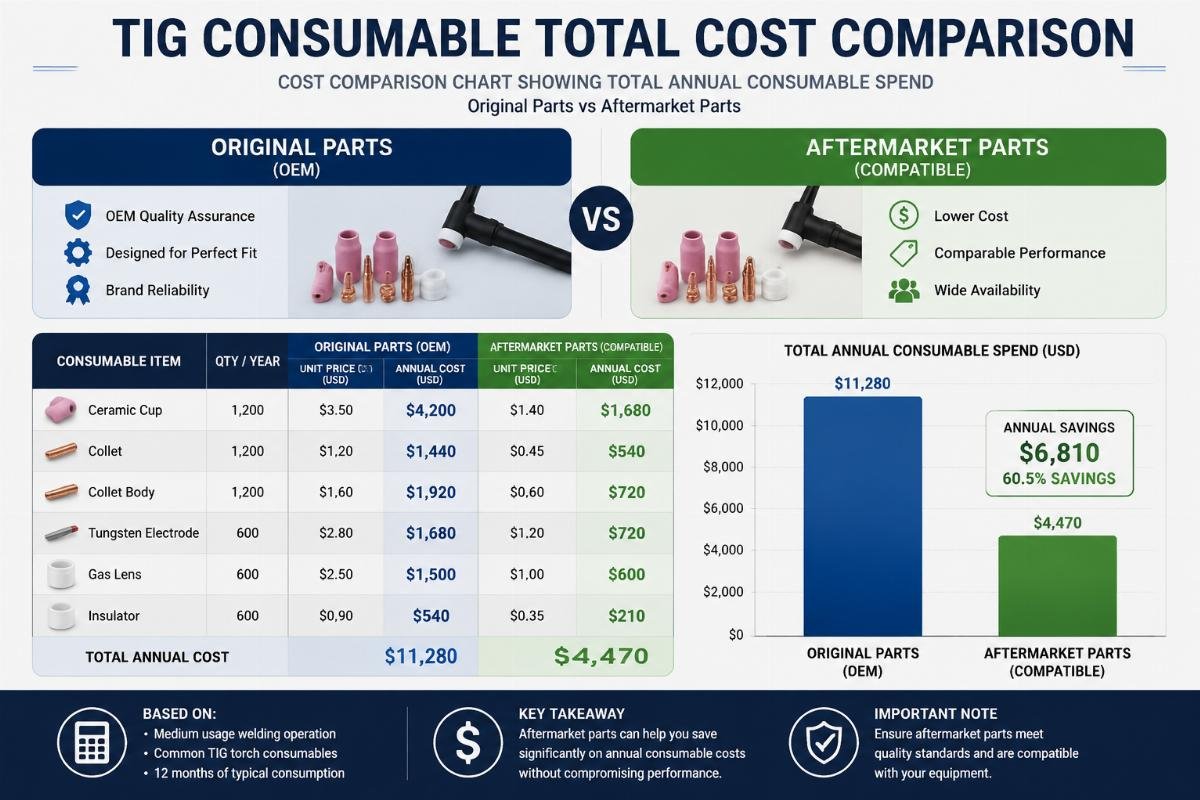
- Run a 3 Month Trial – Swap one line of torches to aftermarket parts and track replacement frequency and performance against your original brand stock.
- Calculate Total Cost of Ownership – Factor in downtime costs and replacement frequency, not just up-front unit price, when comparing options.
- Avoid No-Name Budget Stock – Skip unbranded parts with no batch test data, even if they are priced lower, to avoid hidden performance risks.
How to Avoid Supply Delay Risks for Critical TIG Wear Parts
| Partner with local Australian stock suppliers with nationwide dispatch to cut part lead times from 2 weeks to 1-2 working days. Running out of critical consumables mid-job is one of the most common and easily preventable causes of unplanned downtime for welding operations of all sizes, and can be completely avoided with the right supplier partnership. The Australian-based supplier under Hampdon Industrial carries thousands of SKUs of compatible TIG parts for all common torch series, with nationwide shipping across Australia to cover operations in every state and territory. | Supply Strategy | High Risk Approach | Low Risk Approach |
|---|---|---|---|
| Order Lead Time | Waiting for international shipments with 2+ week lead times | Sourcing from local on-hand stock with 1-2 business day dispatch | |
| Stock Level | Maintaining only 1-2 weeks of on-site stock | Aligning stock levels to your usage rate with just-in-time restock options | |
| Backup Supplier | Having no pre-vetted backup supplier for emergency orders | Pre-approving a secondary local supplier for same-day pickup needs |
We have supported operations across every state from small mobile welding services to large mining sites, and the single most consistent feedback we get from long-term customers is that eliminating supply uncertainty for these small critical parts removes one of the biggest daily operational headaches for their teams.
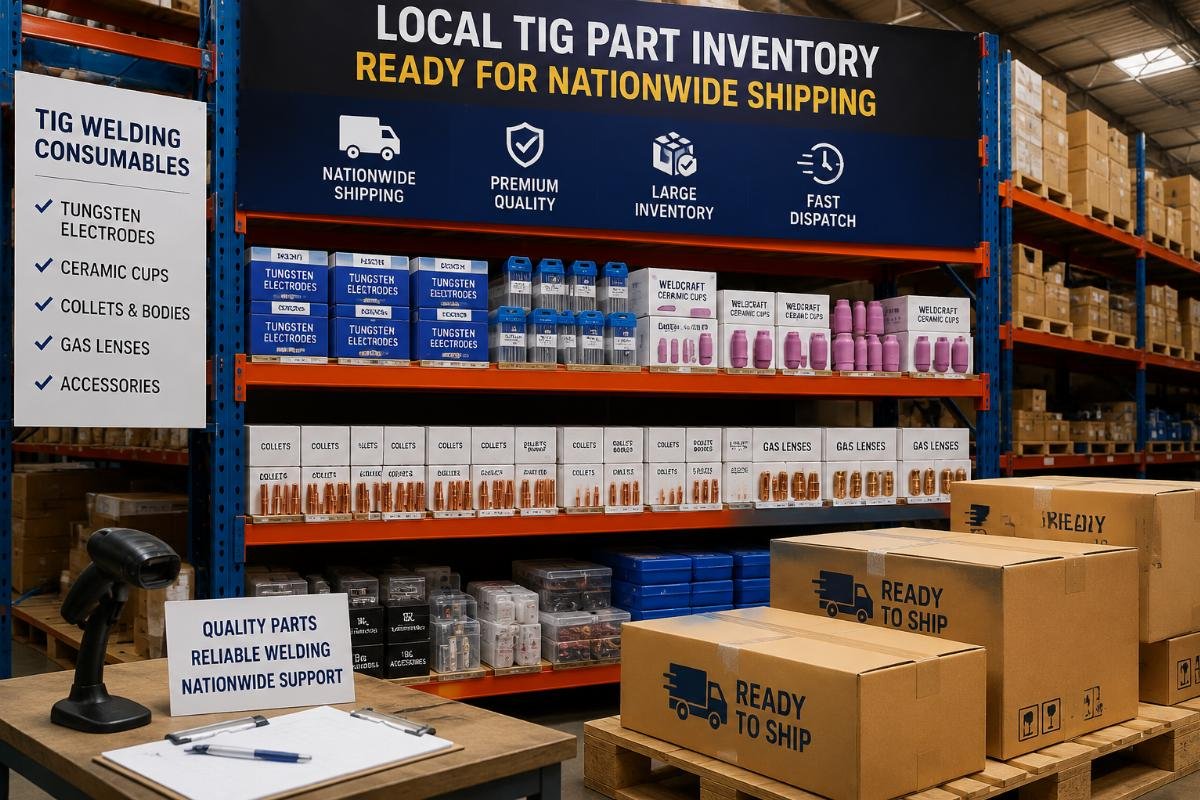
- Audit Supplier Stock – Confirm your supplier carries physical on-hand stock of the exact parts you need, not just drop-ships from third parties.
- Set Restock Triggers – Define clear low-stock thresholds for your most frequently
