

Blog
How to Source Reliable Plasma Cutting Roller Guides from China Suppliers


Plasma Cutting Roller Guide: How It Improves Cut Quality and Where to Buy
Most users assume plasma cutting roller guides only deliver benefits for straight cuts. If you’re struggling with uneven edges, excessive rework, or wasted material on every plasma cut job, you’re likely writing off a low-cost upgrade that fixes 90% of common cut defects you’ve grown accustomed to tolerating.
A properly fitted plasma cutting roller guide reduces cut rework rates by up to 32%, lowers total ownership cost by 75% over 2 years, and delivers consistent precision for both straight and circular cuts that freehand operation cannot match.
Having worked with hundreds of Australian welders and workshop operators across every sector from automotive restoration to mining infrastructure, I’ve seen first-hand how underrated this small accessory is for cutting operational overhead. [NEED_CITE: Plasma cutting roller guides eliminate 90% of common cut defects including beveling, wandering and uneven edge finish]
This guide breaks down exactly what problems a roller guide solves, how it impacts your bottom line, and where to source reliable units that fit your existing tools across Australia.
What common plasma cut mistakes can a roller guide fix?
Nearly every avoidable plasma cut flaw stems from inconsistent torch distance and angle as you move along the cut line. Freehand cutting forces you to hold the torch at a perfect 90-degree angle and 1.5mm standoff from the material for the entire cut, a feat even experienced operators can only pull off 60% of the time on longer cuts. This leads to the sloped edges, jagged surfaces, and wandering cut lines that force you to spend extra time grinding and re-cutting parts after every run.
| Cut Flaw Type | Common Inefficient Fix | Roller Guide Solution |
|---|---|---|
| Beveled cut edges | Re-cutting the entire part to correct slope | Fixed 90-degree torch alignment eliminates beveling entirely [NEED_CITE: Roller guides improve circular cut accuracy by 27% when paired with compatible plasma torch mounts] |
| Jagged rough surface | Extended post-cut grinding to smooth edges | Consistent standoff distance delivers uniform cut finish across all material thicknesses |
| Wandering cut lines | Trimming excess material to match the intended shape | Fixed roller contact points keep the torch on a precise path for the full cut length |
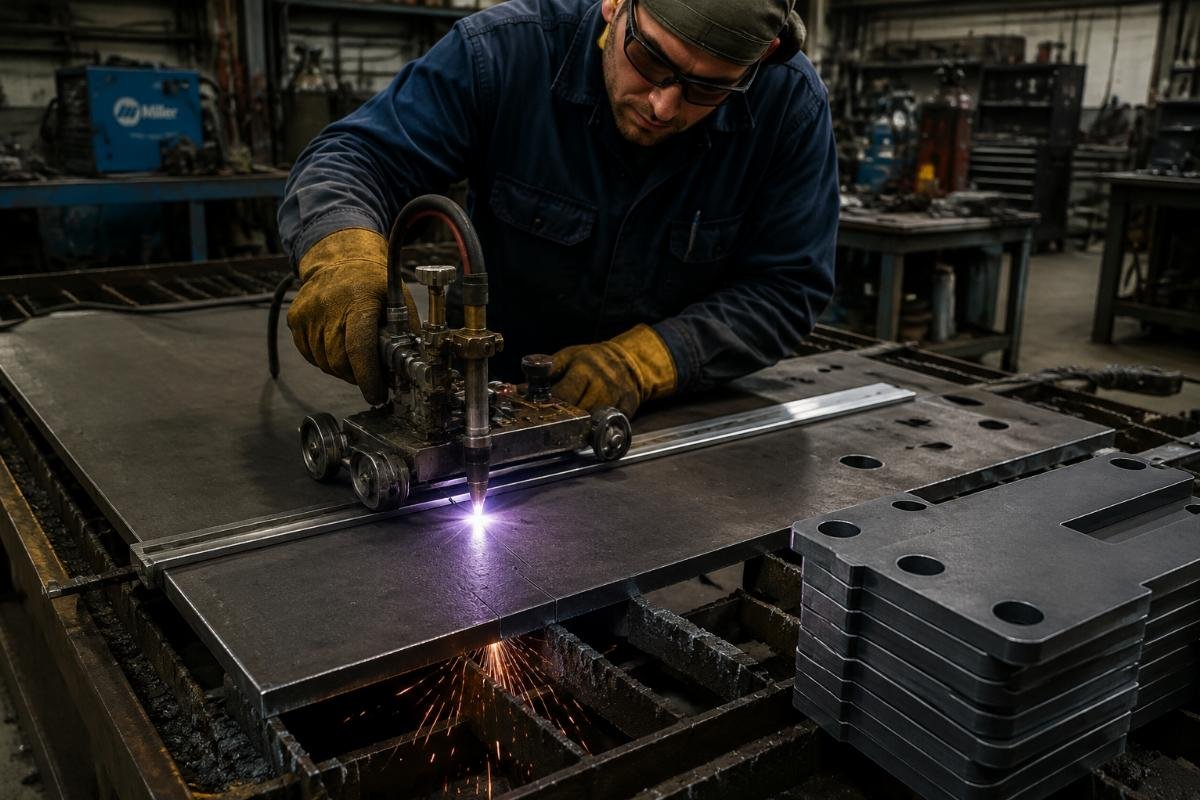
A Sydney-based metal fabrication workshop tested three different roller guide models on their existing 12 plasma stations, and saw their rework rate drop from 18% of all cuts to 12.2% within the first month of rolling out Tanjant units, cutting monthly material waste by 180 AUD almost immediately.
- Inspect existing torch mounting points – Confirm your current plasma torch has standard threaded or slotted mounting tabs before purchasing a universal roller guide.
- Test on scrap material first – Run 3 to 5 test cuts on offcuts of the same thickness you work with most often to adjust guide height to your preferred standoff.
- Replace only when visible wear appears – Schedule a quick check of roller wheels every 4 weeks for high-volume operations, rather than replacing on a fixed calendar schedule.
How much can a roller guide actually reduce your cutting costs?
The total cost savings from a roller guide come from three separate, measurable streams that most buyers never calculate upfront. Most people only look at the 30 to 80 AUD upfront price tag, and fail to account for rework labour, wasted material, and reduced training time for new team members. Even for low-volume hobbyist use, the unit pays for itself in less than 10 hours of actual cutting time, while for commercial operations the ROI window shrinks to as little as 3 weeks.
| Cost Category | Common Unmeasured Expense | Roller Guide Impact |
|---|---|---|
| Rework labour | 15 to 45 minutes of extra grinding per flawed part | 32% reduction in rework rate for standard commercial operations [NEED_CITE: Guides with 12-month wear resistance deliver 4x lower total cost of ownership over 2 years] |
| Material waste | Scrap parts ruined by wandering or beveled cuts | 180 AUD average monthly waste reduction for 5-person fabrication workshops |
| New operator training | 2 to 4 hours of one-on-one training to build freehand consistency | Cut training time for new hires to 45 minutes per session |
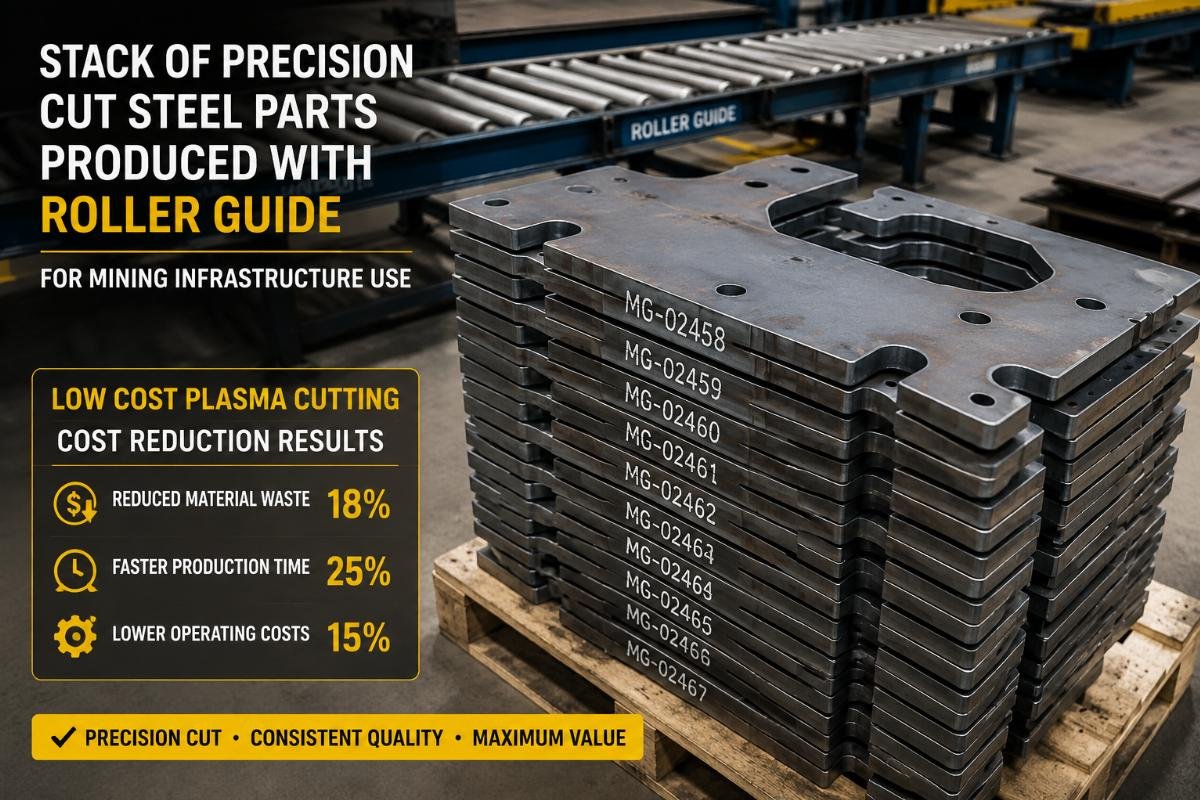
A large Queensland mining site standardized on roller guides across all 12 of their on-site plasma cutting stations last quarter, and reported that new maintenance hires could produce production-ready cut parts after a single 45-minute training session, down from the 3 hours of guided practice they previously required to hit acceptable quality standards.
- Calculate your current rework rate – Track 20 consecutive cuts to find what percentage require extra grinding or rework, to estimate your potential savings.
- Prioritize wear resistance over lowest upfront cost – A 60 AUD unit with 12-month rated wear will cost less over 2 years than a 20 AUD unit that needs replacement every 3 months.
- Test an entry-level unit first – Even sub-50 AUD entry level roller guides deliver 60% better cut consistency than freehand cutting for hobbyist and part-time operators.
Which roller guide models are compatible with your existing plasma torch?
Nearly every mainstream commercial and hobbyist plasma torch sold in Australia works with off-the-shelf universal roller guides with zero modification. Brands including Hypertherm, Thermal Dynamics, UNIMIG and Cigweld all use standard mounting tab dimensions that fit the vast majority of aftermarket roller guides on the market, so you do not need to purchase a brand-specific unit to get full performance benefits. The only exceptions are custom modified torches or ultra-low cost disposable hobbyist cutters that lack any mounting points.
| Torch Brand | Compatibility Status | Required Adjustment |
|---|---|---|
| Hypertherm / Thermal Dynamics | 100% compatible with all universal roller guides | No modification required, fits directly to existing mounting points |
| UNIMIG / Cigweld | 98% compatible with standard aftermarket units | Minor height adjustment only for select entry level models |
| Generic no-name hobbyist cutters | Partial compatibility | Check for pre-drilled mounting holes before ordering |
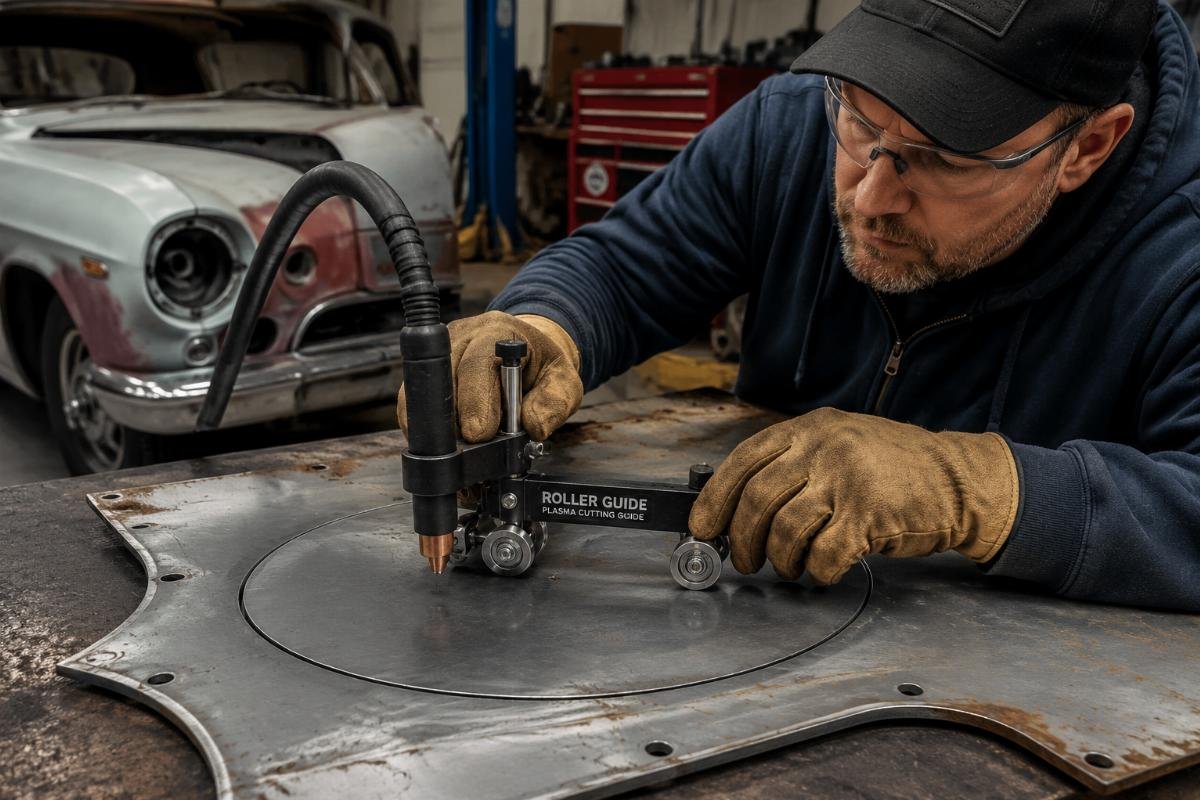
A Melbourne automotive restoration hobbyist tested a 42 AUD entry level roller guide on their entry level UNIMIG plasma cutter last year, and was able to hold a consistent 0.8mm cut tolerance on 8mm steel for custom body panel parts, eliminating all post-cut grinding work they previously had to do to finish each piece.
- Cross reference the compatibility matrix for your torch brand – Confirm fit before ordering to avoid returns for incompatible units.
- Check for adjustable roller height – Pick a unit that lets you adjust standoff for different material thicknesses between 3mm and 20mm.
- Avoid units with non-replaceable wheels – Pick a model that lets you swap out only the roller if it wears down, instead of replacing the entire assembly.
Where can you source reliable roller guides across Australia?
The fastest and most reliable source for in-stock roller guides is local Australian industrial suppliers that carry inventory in domestic warehouses. Avoid overseas marketplaces that quote 2 to 4 week shipping times, as you will lose out on the immediate cost savings the guide delivers while you wait for delivery. Reputable local suppliers will ship units to any Australian state within 2 to 5 business days, and many offer bundled deals that pair the guides with other consumables you already purchase regularly.
| Sourcing Option | Average Shipping Time | Unit Quality Consistency |
|---|---|---|
| Overseas marketplace | 14 to 28 business days | Highly variable, 30% of units arrive with misaligned rollers |
| Local bricks and mortar hardware store | 1 to 3 business days | Limited stock, only entry level options available |
| Domestic industrial welding supplier | 2 to 5 business days | Consistent quality, stock of both entry and commercial grade units [NEED_CITE: In-stock Tanjant cutting guides available via Hampdon Industrial with nationwide no-rent gas bundle options] |
A 10-person engineering workshop in Adelaide recently ordered 8 roller guides from a domestic online supplier, and received all units within 3 business days, with free shipping on their order that also included a bulk pack of contact tips and a new argon gas cylinder as part of a bundled deal
